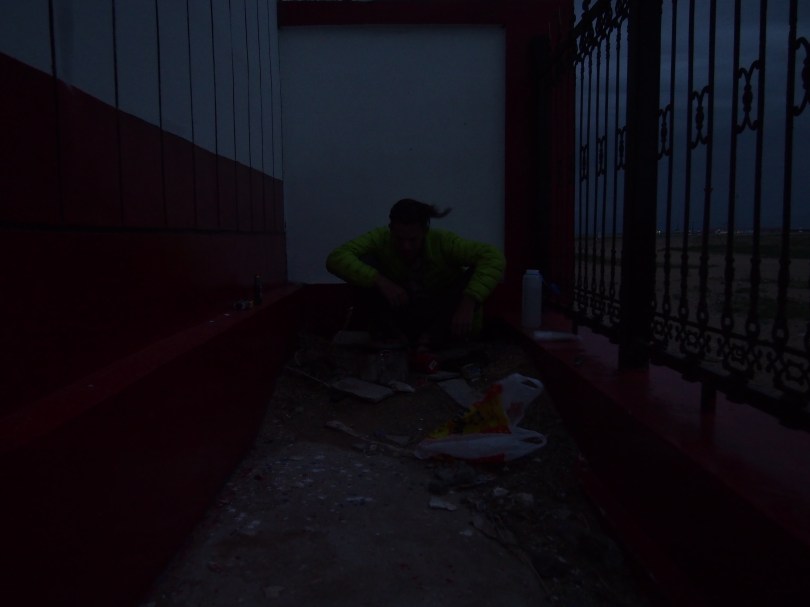
The wind is howling over our lodging tonight. It is our first night in China after successfully crossing the border (a story in its own right). But tonight, as mysterious rapping echoes through the dusty halls and truck horns moan on the nearby road, I want to explain where we are and how we got here.
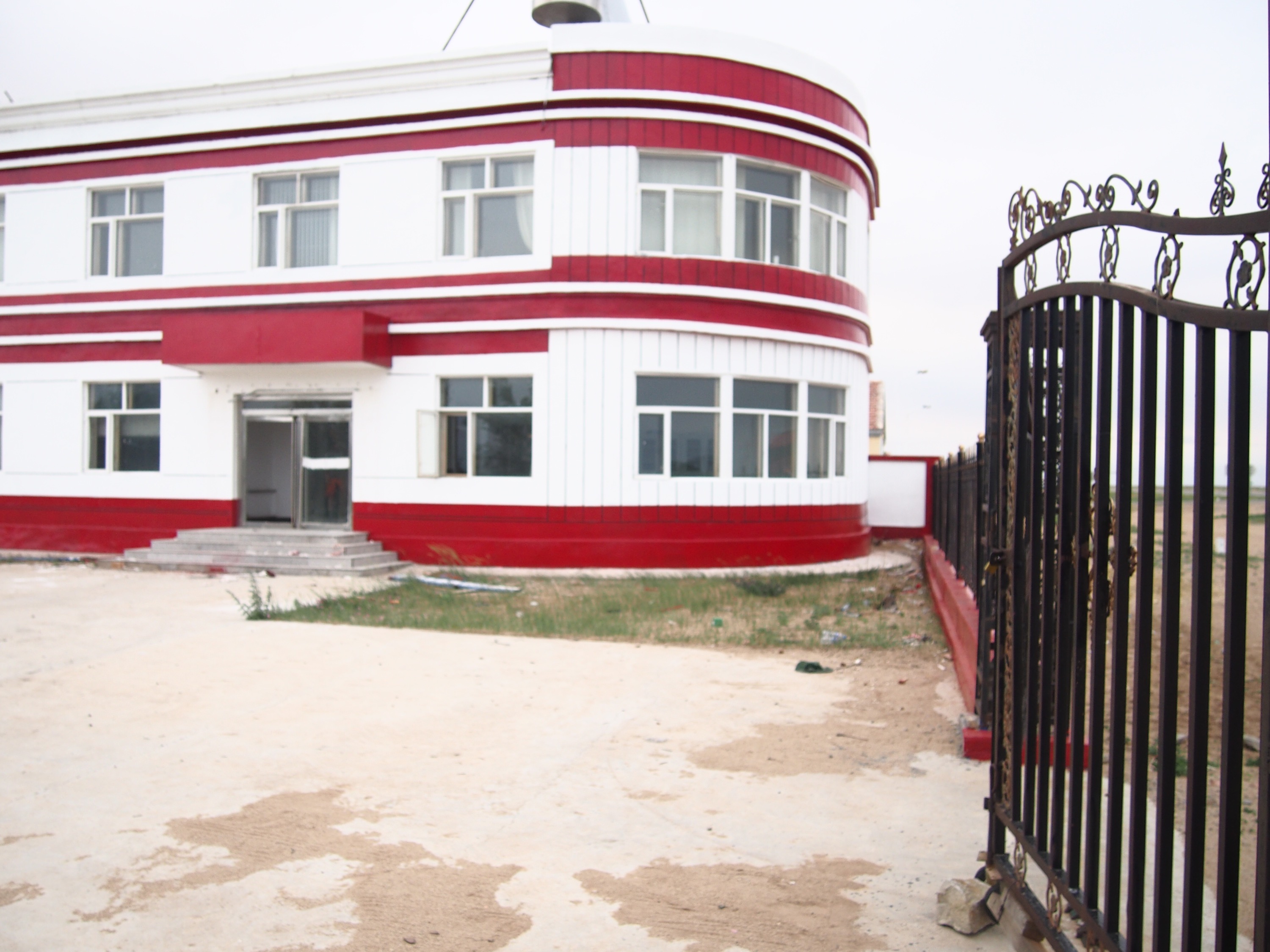
From the collapsed sign out front, we deduced that we’re in an abandoned traffic police station.
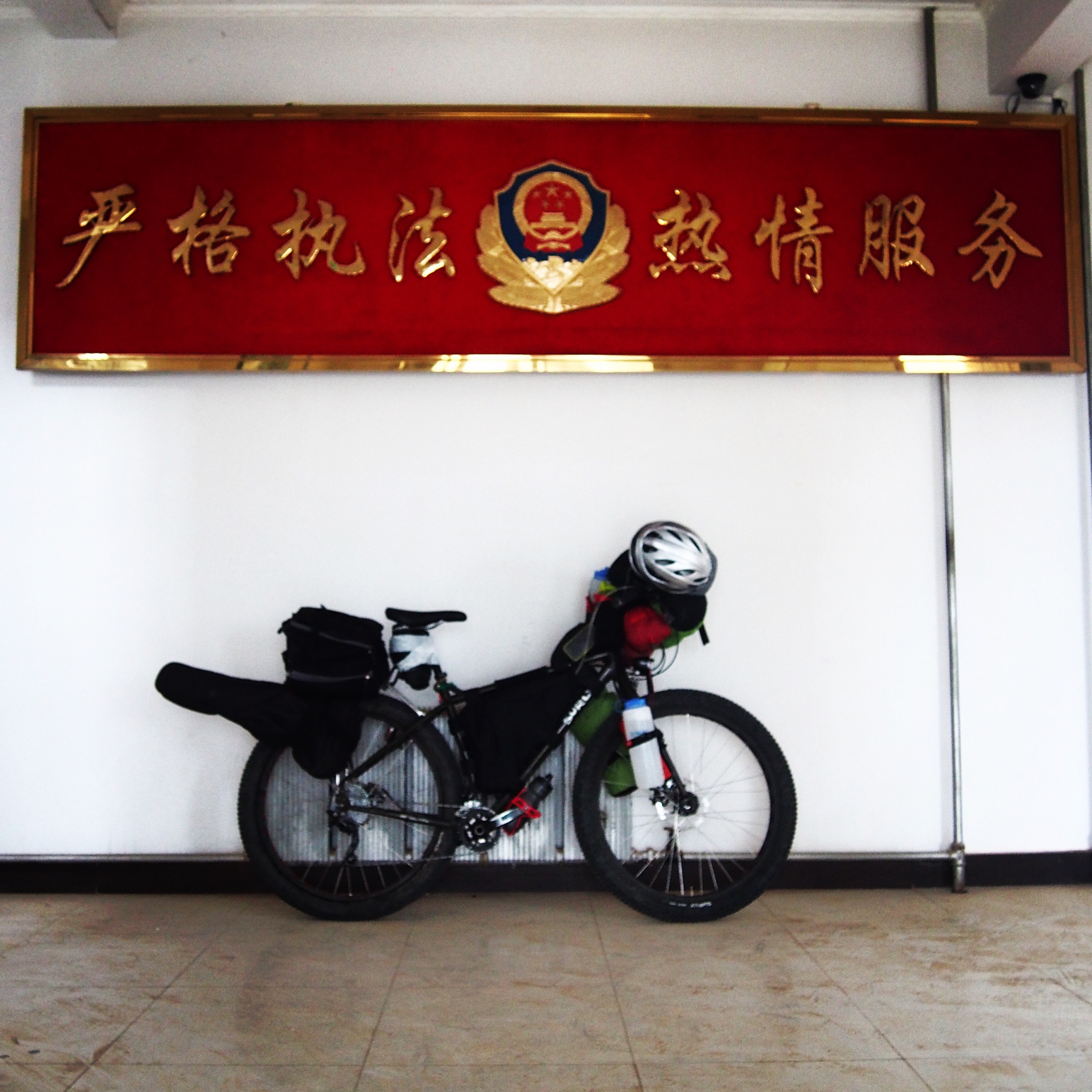
There is still a brilliant red banner lined by gold to that effect in the main hall. Sebrand notes that it’s bizarrely clean for its musty surroundings: flaking ceilings, dust tracked floors, and moldy walls. The whole place smells of paint solvent and decayed plaster. We’re in the front office, windowed on all sides but the inner wall. There is a window to the entry hall that we opened to clear the air a little.
How did we get here? We biked for many miles out of Erenhot, still a part of the Gobi, but today uniquely windy and sunless. Dark clouds loomed. Fed up with the gusts, we pulled aside at a sandy lot, in front of a dim shop to which the stairs had been destroyed or never built. The lot looked like a construction area, but the tracks weren’t clearly from cars or from bulldozers. We might have thought the shop was closed if we weren’t so accustomed to these run down places sparing electricity. We climbed onto the patio and entered the shop, and, being inside, lost the heart to bear with the wind any longer. With hand motions we asked the old shopkeeper if we could set up our tent out front. At first he ignored us, but with some pleading, he beckoned us to follow. Out of the dirt he brought us next door to a locked gate, large and ornate like that of a manor, complete with gold trim and fresh red paint (noted from the paint stains we saw on the grass). In the courtyard there was a small tree and two dilapidated buildings. One looked like a residence and was a bit further.

We stayed in the closer one with the fallen police sign. One of the glass doors to the building had been shattered, though the shards had long been swept away. There were red paint splatters on the stairs surrounding a discarded kitchen kitchen knife, lying there ominously in front of the door.
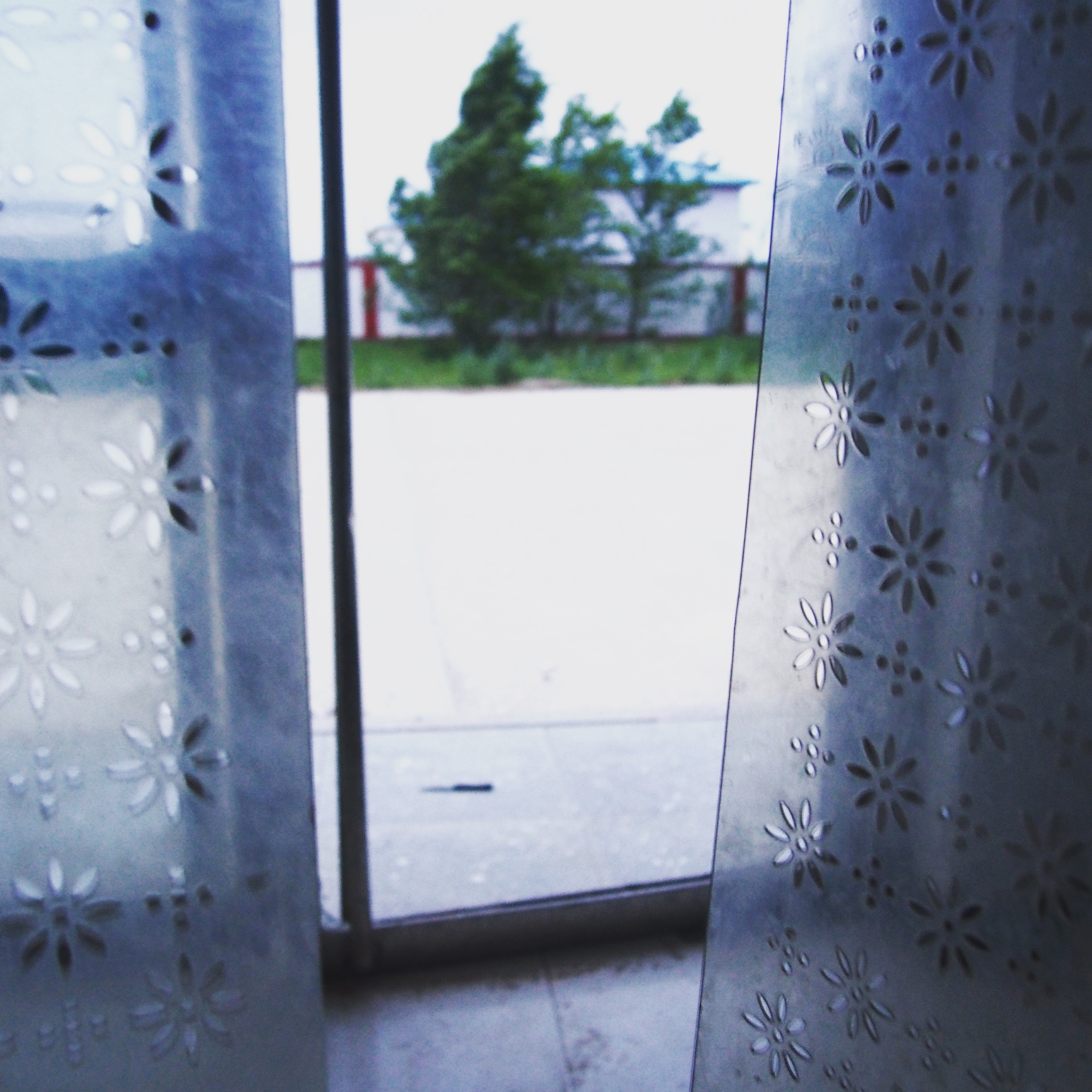
With our bikes, we followed our shelterer, who bore a sweet but uncomfortable smile, through the shattered door, stepping through its empty frame. Inside was somber. Translucent plastic drapes, the kind you might see in a quarantine tent, separated the entry hall from the main hall. We pushed these aside to find the bright red banner underneath which we rested our bikes. The old man showed us to our office and left us on our own with a shy grin and a bow.
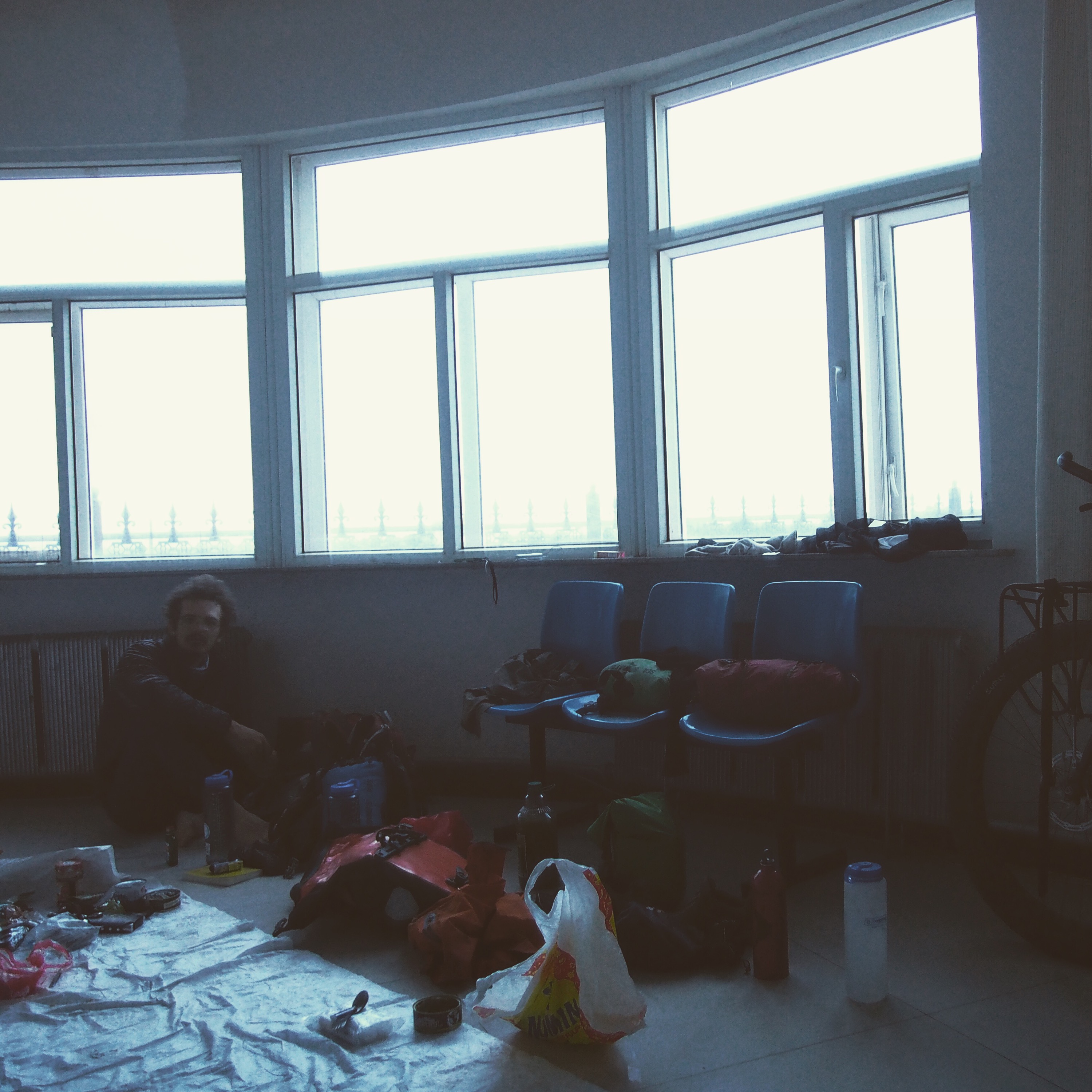
As I write this, it is dark. The wind still roars over the building and through the shattered front door, exciting the medical drapes to tap like footsteps in the entry hall. I keep expecting to see the man standing at the window we opened, but of course there’s no one there. Sounds I can’t identify pitter-patter through the walls. There are cameras at every high corner. Drips can be heard like the gnawing and salivating of an animal. Shadows of the pointed fence posts glide along the walls swiftly like rows of knives as cars hiss down the road. We hope for a good night’s sleep.
P. S.: We hid the knife. We felt maybe that it was too much of a Chekhov’s gun to be left where it was. That gave us some peace of mind.
End journal entry





 Biking Across China